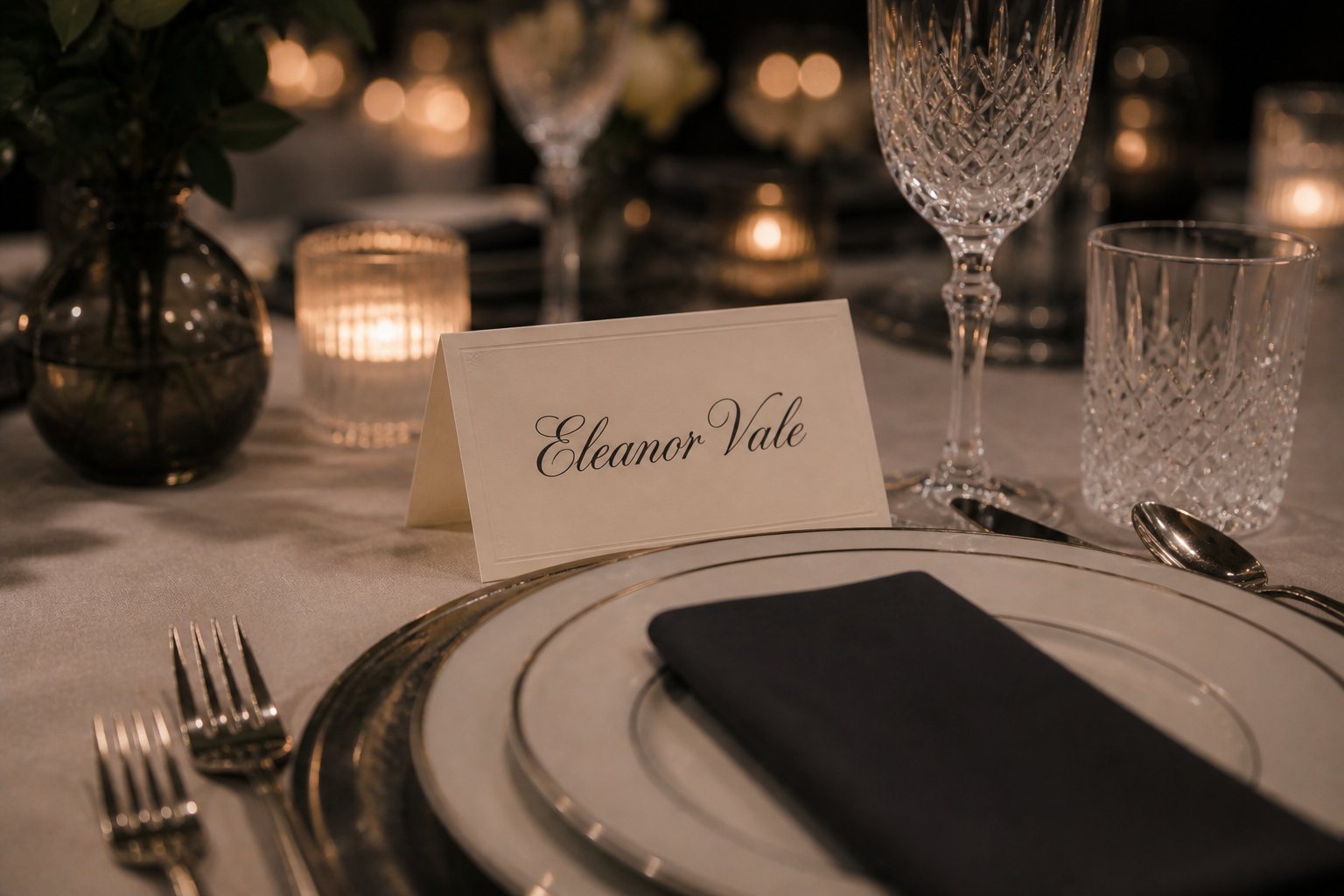
An invitation arrives for a gala, wedding, awards evening, charity dinner or important business reception. A guest is permitted, but the person who would be right for that particular room is not immediately obvious.
This is not necessarily about being alone. A woman may have a full professional and social life, yet still have no friend, colleague or partner who is both available and suitable for a particular occasion. The real question is often not simply who can attend? It is who will understand the setting, support the purpose of the evening and behave in a way that feels completely natural?
A carefully chosen companion can make an important occasion more comfortable. The arrangement works best when his role, introduction and boundaries are agreed before the event. He should complement the evening without becoming its focus.
First, confirm that the invitation includes a guest
Before considering whom to take, read the invitation carefully. A named invitation does not automatically include a plus-one. Debrett’s guidance on formal events similarly advises guests to observe the invitation’s instructions concerning partners and additional guests.
If the wording is unclear, a brief and courteous question to the host or organiser is better than an assumption. The purpose is to remove uncertainty without placing the host under pressure. If a guest is not included, attending alone is more appropriate than arriving with somebody unexpected.
Decide what you need from the evening
The right companion depends on why the event matters.
At a wedding or family celebration, you may want warm, relaxed company and somebody who can converse easily with different generations. At a gala or charity dinner, social confidence, formal manners and an understanding of the cause may matter more. A corporate reception may require somebody who can engage intelligently without intruding upon professional conversations.
Before making an arrangement, identify the practical outcome you want. It might be:
- arriving and leaving with composed company;
- having a familiar presence during dinner;
- avoiding repeated questions about attending alone;
- receiving quiet support while meeting unfamiliar people;
- having somebody who can sustain conversation when necessary; or
- being free to concentrate on professional relationships while your guest remains comfortable and independent.
Clarity at this stage prevents the companion from either doing too much or waiting for direction throughout the evening.
Guest, friend, colleague or romantic date?
How a companion is introduced shapes what other people assume. The most sophisticated solution is usually the simplest truthful description.
“My guest this evening”
This is the safest and most versatile introduction. It is accurate, discreet and rarely invites further explanation. It works particularly well at galas, awards events, cultural evenings and formal dinners.
“A friend who is joining me tonight”
This can feel warmer and more personal where both people are comfortable with the description. It suits social occasions at which a very formal introduction would appear unnecessarily guarded.
“A business colleague”
This should be used only when a genuine professional connection makes it accurate. At a business event, invented credentials or an exaggerated professional history can quickly become uncomfortable if other guests ask detailed questions.
A romantic introduction
Presenting somebody as a boyfriend or established romantic partner creates expectations of familiarity, shared history and future recognition. It therefore carries greater personal and reputational risk. A professional companion should not require an elaborate fictional backstory. Neutral language and agreed boundaries are usually more convincing than overacting.
The objective is discretion, not deception. A companion can be warm, attentive and socially credible without making false claims about either person’s private life.
The pre-event briefing
Preparation is what makes the evening feel effortless. A useful briefing should cover enough detail for the companion to understand the room without rehearsing every conversation.
Discuss:
- the purpose and level of formality of the event;
- the host, organisers and any particularly important guests;
- how you know the people attending;
- the description you will use when introducing one another;
- whether your priority is social enjoyment, professional networking, family diplomacy or simple companionship;
- the dress code and any venue-specific expectations;
- arrival time, seating, transport and departure arrangements;
- subjects or personal questions that should be handled carefully;
- whether photographs or social-media posts are likely; and
- the degree of independence you expect from him during the evening.
A short list of names and relationships can be helpful, particularly at a professional occasion. It should provide context rather than encourage the companion to pretend to know people or events he has never encountered.
How a good companion should behave in the room
The most valuable quality is judgement. A polished companion knows when to participate, when to make an introduction easier and when to step back.
He should be able to speak comfortably to the person seated beside him, include somebody who has been left out of a conversation and handle a change of plan without visible irritation. He should not dominate discussions, compete for attention or repeatedly steer the subject towards himself.
At a professional event, he must recognise that the client may need to circulate or hold conversations that do not include him. He should remain socially self-sufficient rather than requiring continuous attention. When appropriate, he can help create a natural opening to a conversation, then allow the client’s own expertise and relationships to remain central.
Discretion also appears in small decisions: moderate alcohol, restrained phone use, no unsolicited photographs and no discussion of private information. The companion’s conduct reflects upon the woman who brought him, just as any invited guest’s conduct would.
Agree personal boundaries before the event
No assumptions should be left until arrival. Agree in advance:
- whether any physical familiarity is appropriate;
- how you will handle personal questions from other guests;
- whether you will remain together throughout the event or circulate separately;
- what may be photographed or posted publicly;
- confidentiality concerning people, conversations and locations;
- alcohol preferences and any practical safety considerations;
- transport, waiting time and the planned finish; and
- for travel or overnight arrangements, separate accommodation, expenses and personal space.
Clear boundaries do not make an arrangement feel transactional. They allow both people to relax because neither is required to interpret an uncertain situation in public.
A formal-event companion briefing checklist
Before confirming the arrangement, make sure you can answer these questions:
- Does the invitation permit a guest?
- What is the purpose of the occasion for me?
- How will I introduce my companion?
- Which people, relationships or sensitivities should he understand?
- When should he support conversation, and when should he step back?
- What degree of physical familiarity, if any, is appropriate?
- Are photographs or social-media posts permitted?
- What are the arrival, transport and departure plans?
- Have confidentiality, expenses and personal boundaries been agreed?
- Would attending alone be preferable to any part of the proposed arrangement feeling untrue or uncomfortable?
When attending alone may be the better choice
A companion is not the right solution for every invitation. Attend alone if the host has not offered a guest, if the event requires private professional discussion, or if the only way to explain the companion would involve a story that neither person can represent comfortably.
There is also no reason to take a guest merely to satisfy an imagined expectation. The arrangement should solve a real practical or social concern and make the woman feel more at ease. If it creates additional anxiety, attending independently is the more confident decision.
The companion should never become the story
The best outcome is not a performance. It is an evening in which the woman feels supported, the companion understands the setting and other guests experience his presence as entirely unremarkable.
That depends less on a clever explanation than on preparation: choosing somebody appropriate, using a simple introduction, agreeing boundaries and ensuring that he understands the purpose of the occasion. When those details have been handled privately, the public experience can remain calm, natural and discreet.
For information about professionally arranged company for a gala, awards evening, wedding or formal occasion, see Black Tie and Gala Companion for Women and How Arrangements Work. Private enquiries may be made through the confidential contact page.